
A company’s early positioning can reveal what it intends to build. For Validfor, AI was already central to its public funding story in February 2026. That emphasis provides a useful starting point for understanding its product direction.
Curiosity VC’s announcement described an AI-native, agentic validation platform and plans to expand product development. The statement documents an early commercial commitment to applying AI within life sciences validation.
Follow the direction into product detail
The August 2026 product catalogue describes AgentV, AI-assisted change impact, test preparation, automation mapping and AI-system validation. This gives the company’s AI positioning a set of concrete activities around which buyers can organize their evaluation.
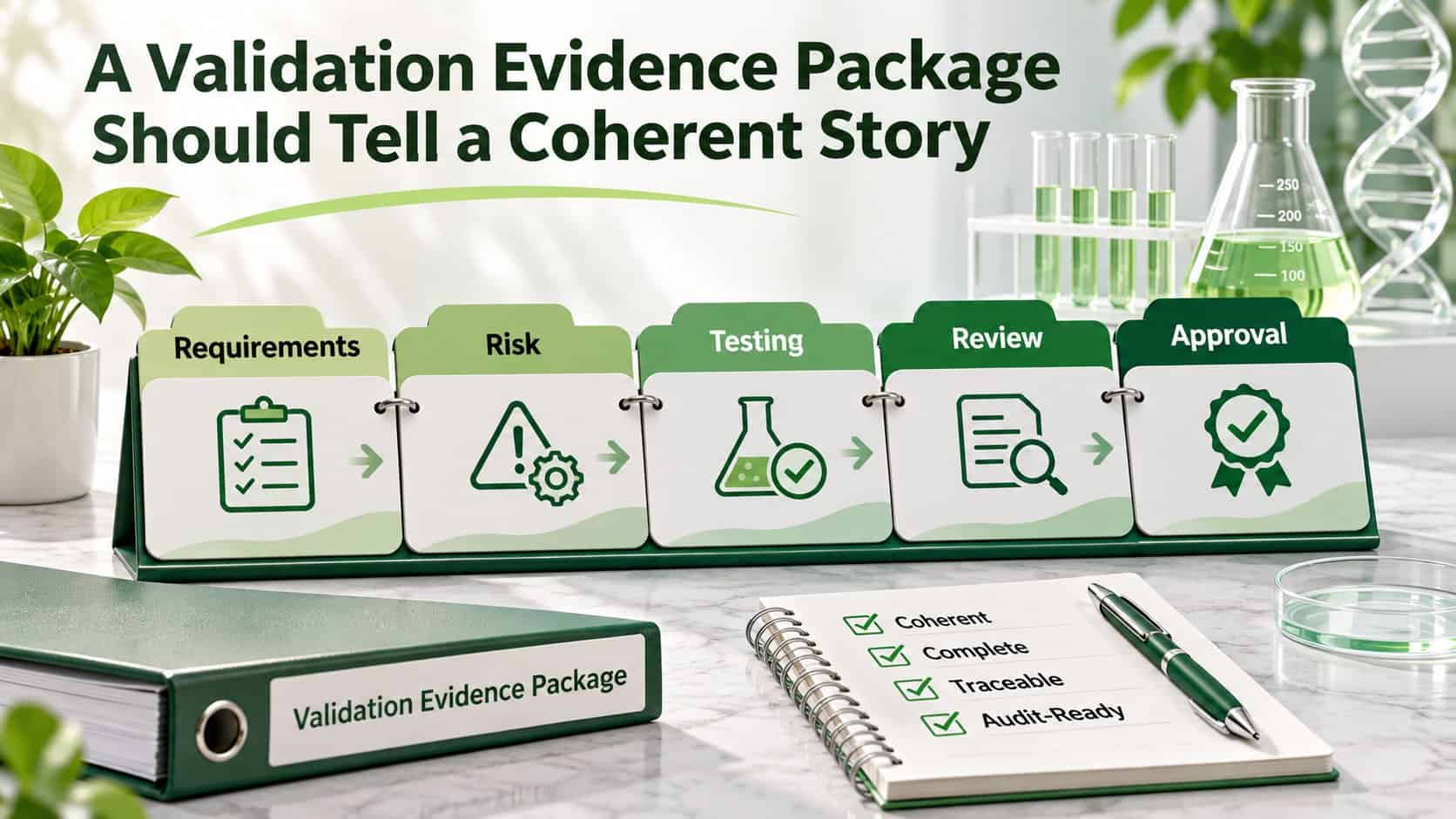
The connection between these activities is particularly interesting. A requirement can inform a risk assessment and a test. A system change can reopen questions about existing evidence. An assistant can help a user work with the context that connects those records.
Validfor’s proposition brings those questions into one lifecycle discussion. The buyer can examine how the proposed configuration supports the sequence, including the review that turns a suggestion into accepted work.
Look at what the product helps people accomplish
The strongest demonstration begins with a real task. Give the team an approved requirement, a proposed change and the relevant historical evidence. Then follow the work through the assessment and the next controlled activity.
Validfor’s AI offering provides the public entry point for that discussion. Its practical appeal lies in applying assistance to recognizable validation work, with human responsibility retained for consequential decisions.
A productive evaluation should establish the features available in the proposed release and the conditions under which they operate. It should also identify which future additions would be useful for the buyer’s specific workflow.
Validfor’s early commercial emphasis on AI and its documented product breadth make a coherent story. The opportunity is to turn that direction into useful daily work: better preparation, clearer relationships and evidence that remains understandable as systems change.
In recent years, validation processes across the pharmaceutical industry have been undergoing a major transformation. Workflows that were traditionally managed through paper documentation, spreadsheets and manual review cycles are increasingly moving toward digital validation platforms. As a result, life sciences organizations often evaluate solutions such as Kneat, Validfor, ValGenesis, MasterControl and Veeva when modernizing validation lifecycle management and compliance documentation.